Sponsored
From 35ac to 60ac a day: Conroys' big leap with the 5m Amazone Avant

Sponsored by
Tom Garaghty works with Oliver Conroy Plant and Agri, a Rochfortbridge, Co. Westmeath-based slurry, silage and tillage contractor and long-time Amazone customers.
The contractors previously operated the AD-P and Centaya drills before upgrading to the new 5m Amazone Avant 02 with FTender 2200 front-mounted hopper.
Tom said: “The Avant drill came here new last October from Eardly’s in Kilkenny.
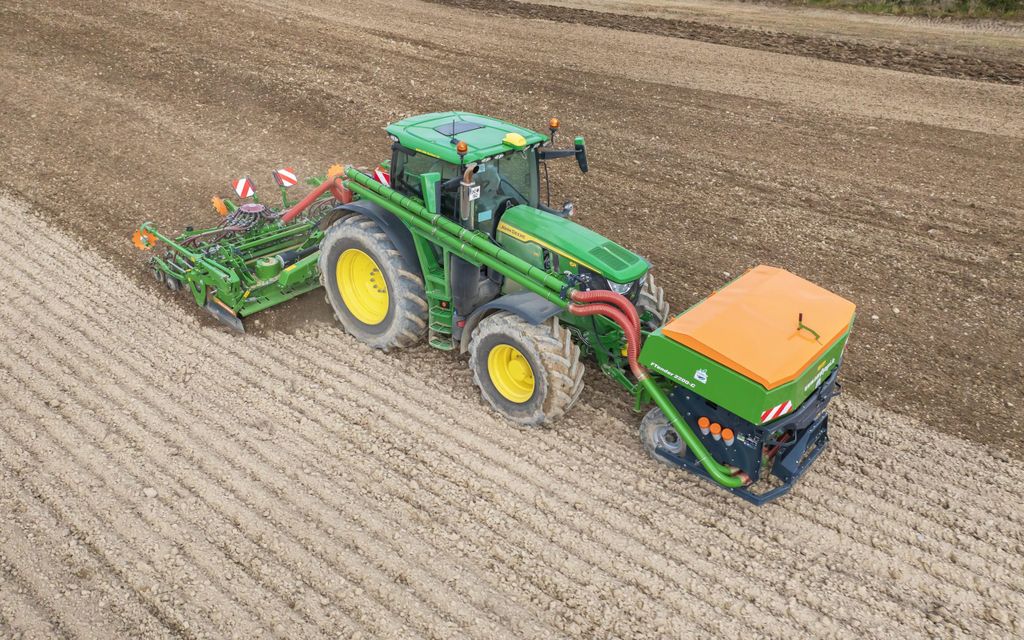
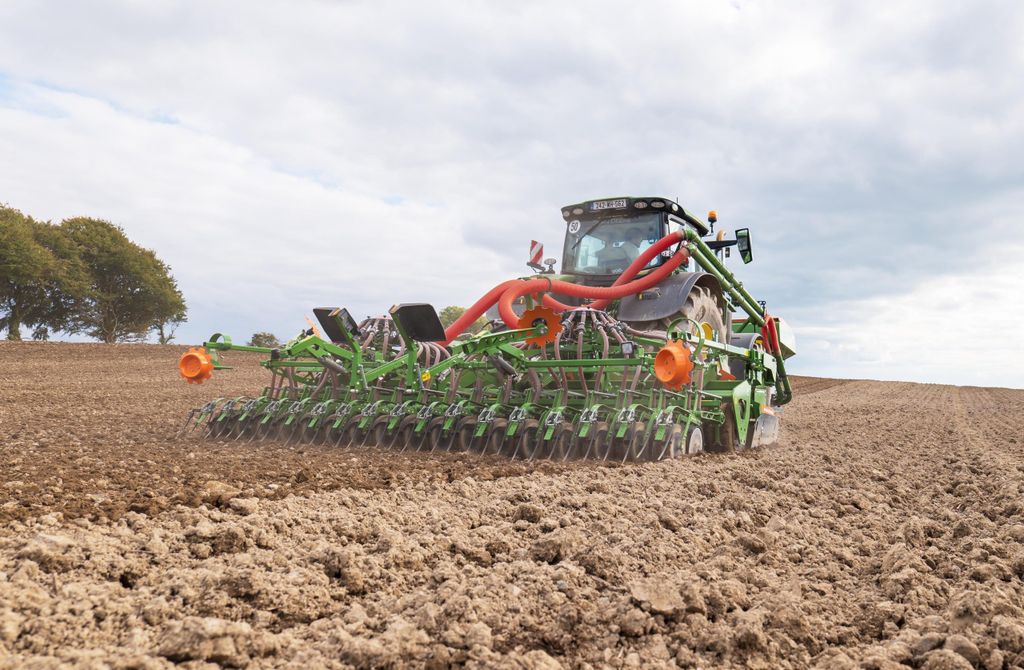
"It’s a combination of a front hopper and a 5m folding power harrow behind, and it is a great job for getting through ground.
"We always had a 3m drill so it's a big step up for us.”
The contractors were sowing winter barley in Collinstown, Co. Westmeath.
"The harvest was very good because the weather was great," Tom said.
"Then we were to try and sow oil seed rape in here, but it got a bit wet, it got a bit late for it, so, we're going with the barley now."
He said that Gigginstown Stud owns the land they are working on, Conroys do the harvesting and sowing.
"The trailer load of seed was left in the field this morning. The lads brought out the teleporter and that's it. You bang away on your own," he said.
"There's 85ac in this field roughly. No ESB poles so that's handy enough.”
Tom explained that the priority for the contractors is "getting through the work a bit quicker".
"The acres always seem to be going up and the weather seems to be getting worse, so you have a short window to try and get through it.
“The last Amazone we had was a 3m Amazone Centaya. It was a good drill, it just wasn't doing enough acres during the day.
"With the 3m drill, you'd sow 35ac in the day, but whereas now we're sowing well over 60 there handy enough - it's a big jump up for us,"” he explained.
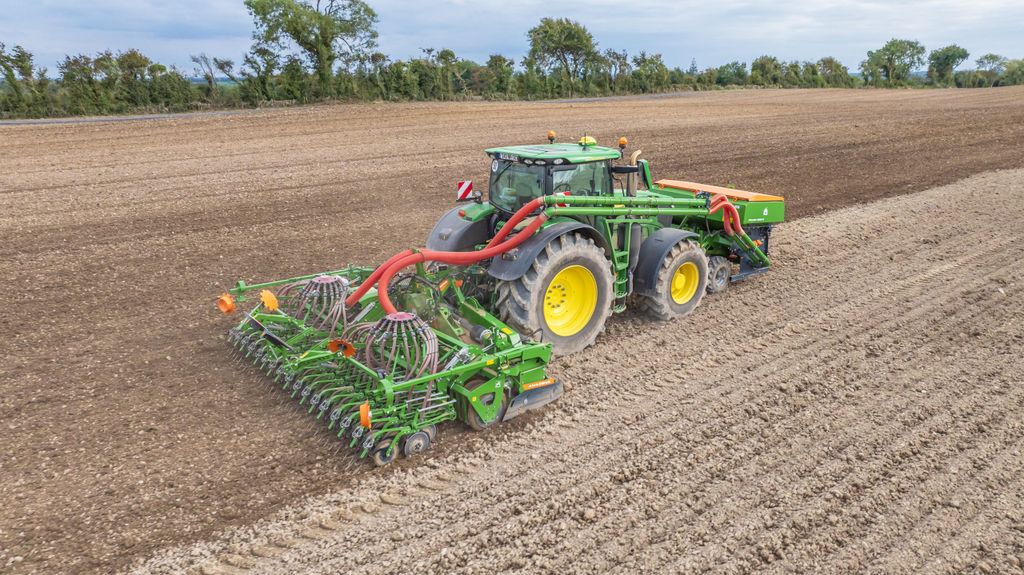
The Avant mounted seed drill combination is available in working widths from 3-6m.
With the FTender mounted front tank. it is the ideal machine for contractors and larger tillage farmers.
The weight distribution of the mounted front hopper with seed at the front and the power harrow with a seed rail at the rear ensures optimum axle load distribution.
The Amazone harrow has proven itself in tough Irish conditions over the years, earning a reputation for strength and reliability on heavy, wet soils.
Built to withstand long working days and challenging ground conditions, it consistently delivers a high-quality seedbed even when weather windows are tight.
Its heavy-duty construction mean less downtime, reduced wear, and the confidence to keep working when conditions are far from ideal.
“A lot of it is the size of the fields. If you have good open fields you would sow a lot of ground," Tom said.
"You get into a smaller field, then you could have four or five fields, a lot of headlands to do, it gets slower. But it's much the same in a small field as a as a big field.
"I drove a 3m drill for years. I wouldn't go back to driving a 3m, this is so much handier. It looks big, but it's very easy to move around, it's a tidy and compact drill.”
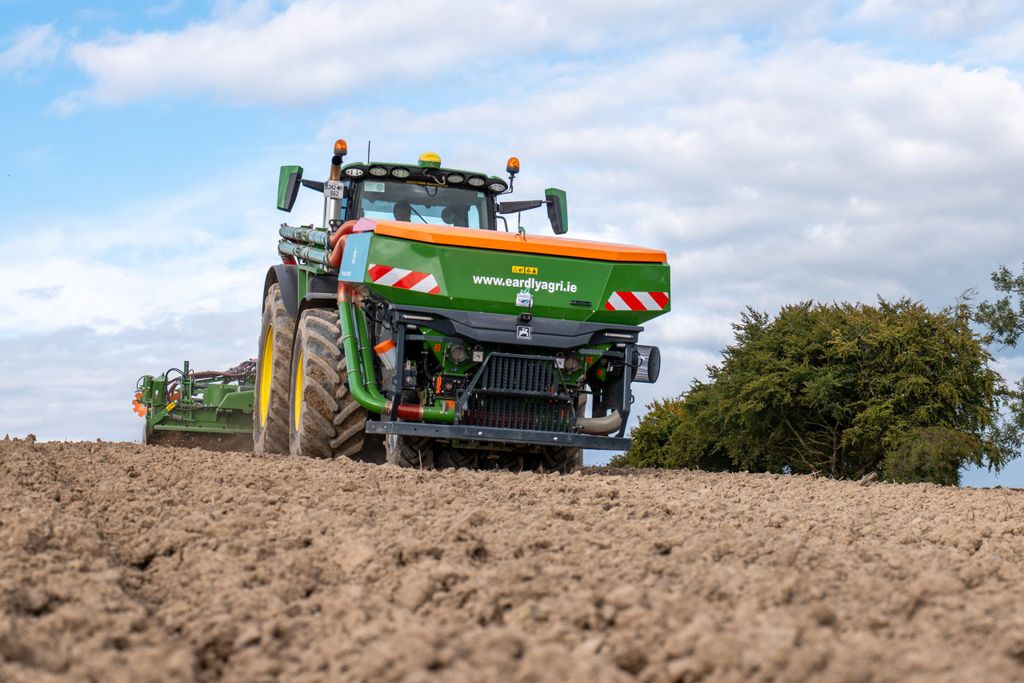
With a hopper capacity of 1,600L or 2,200L the FTenders split hopper enables seed and fertiliser to be combined.
“We put two 500kg bags into the bin. You can probably put another third bag into it, but we never really do that the two bags is enough to keep you going for a couple of hours," he said.
"There is a camera on the front of the hopper there so when you're coming out of a lane way, you can see left or right or you can see straight on when it's dark. it’s a great help."
The hopper also has a radar attached to "regulate the seed".
"The radar's on the front, so if I go harder, the seed comes out quicker. If you slow down for stonier ground or wetter ground, seed comes out a bit slower," Tom explained.
"It's always at the same rate through the screen and you tell it what kg/ha and you do it all through the cab.”
“So tell it if it's spring barley or winter barley, seed rate and it's all going through the screens.
"Same with the disc coulters, you can set the depth from the cab. You don't have to get out at all really.”
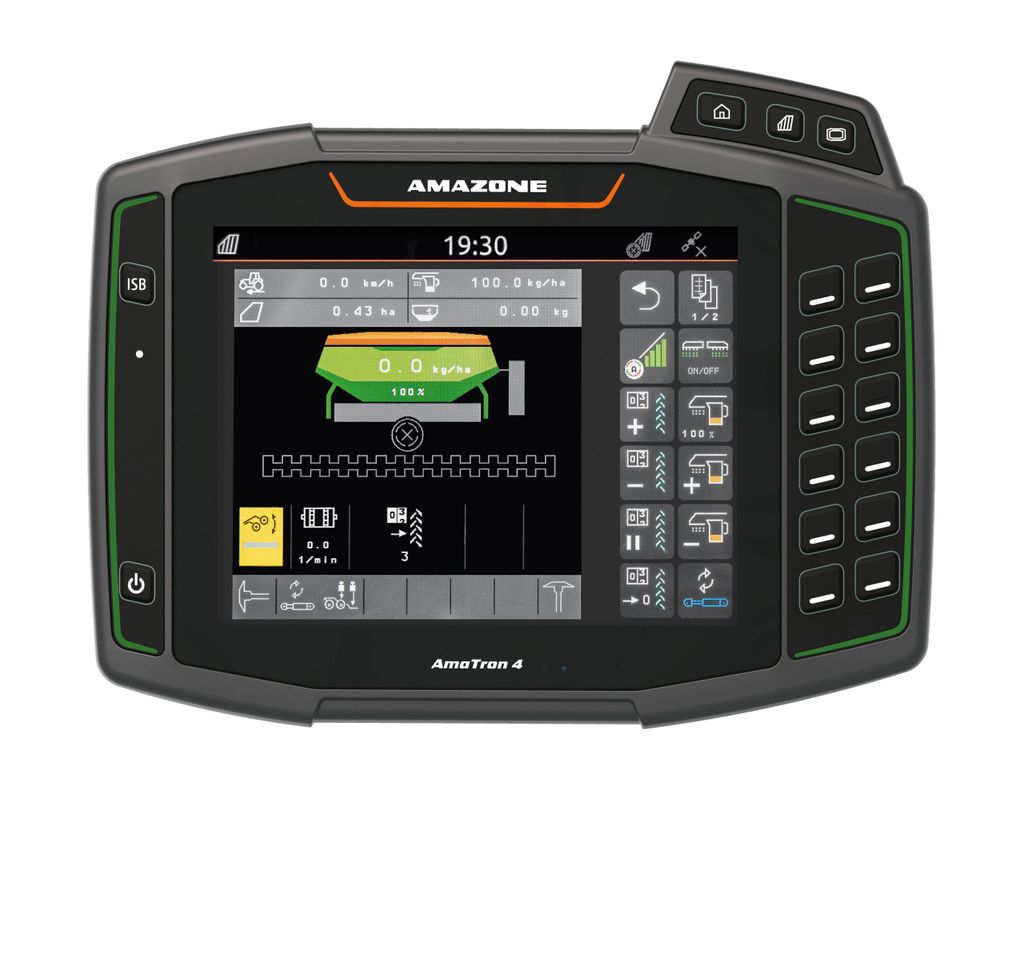
The electrically driven metering enables easy adjustment of the seed rate from the tractor cab, pre-metering in field corners and calibration at the touch of a button.
Alternatively, the metering can be controlled fully automatically by application maps.
Hydraulic coulter adjustment allows the coulter pressure to be comfortably adjusted from the tractor cab.
The coulter can also be lifted by up to 145mm, which is an extremely useful option for working in field corners.
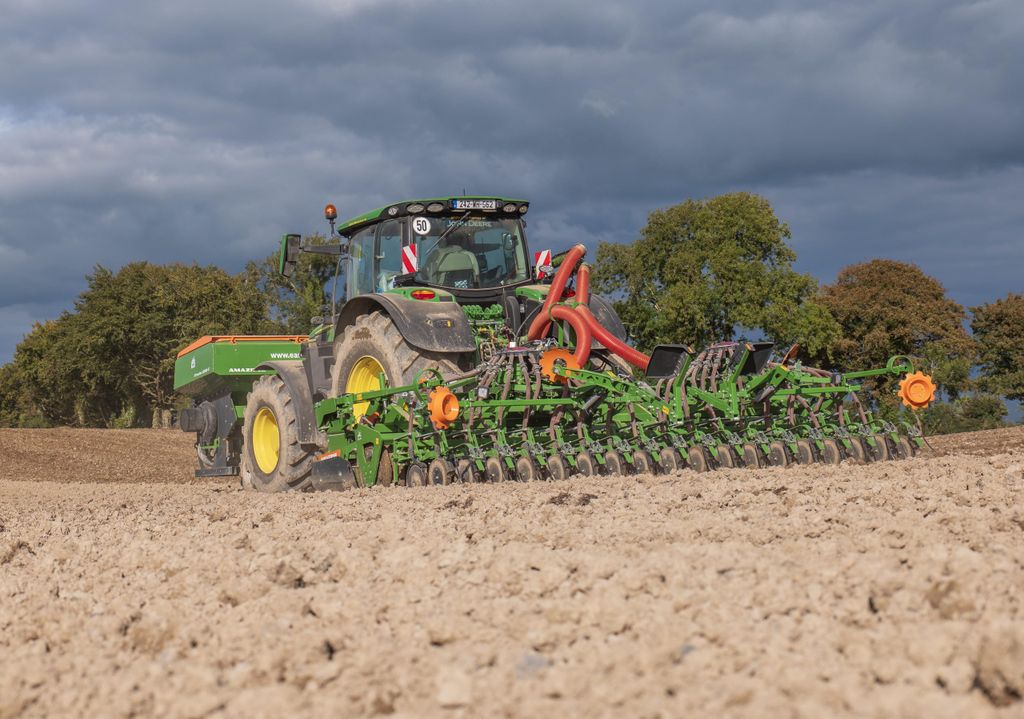
“You can put fertiliser down the spout - we are not doing it at the minute but could have barley in one hopper and have fertiliser in the other hopper. We're going straight in with barley,” Tom explained.
“If you were sowing your oil seed rape, you could have your rape on one side and you'd have your fertiliser on the other side. Putting both them in together is a great job.
“The packer wheels on the front will turn, if you're going around a bend they will turn and they're packing it down as well.
"So, when you’re on the road, then you push in the pin and it brings the wheels right up underneath it so you can carry the hopper lower. That way you can see more on the road.”
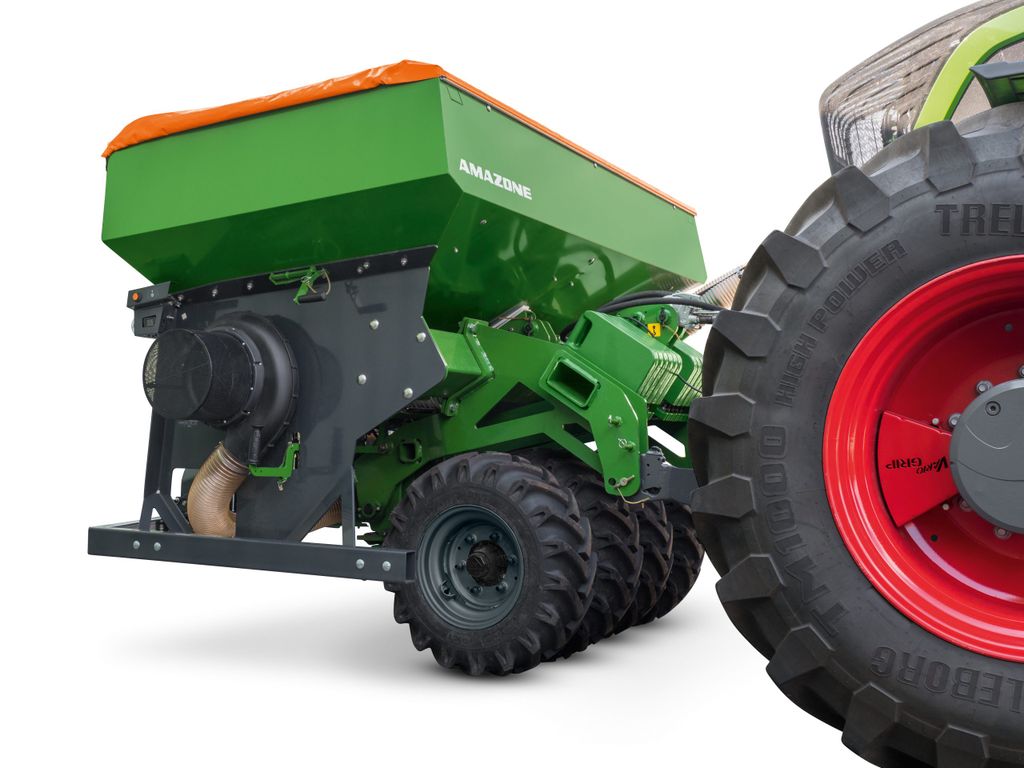
Amazone also offers the FTender with the optional T-Pack F front tyre packer ensuring good reconsolidation between the tractor wheels.
The extremely compact design of the FTender allows comfortable handling of the large mounted front hopper, and the front tyre packer is integrated in such a way that its transport position does not restrict the field of view.
Moving from one field to the next is quick and easy, fold in hydraulically, drive to the next field, fold out and start work.
The machine is folded out from a transport width of 3m to a working width of, for instance, 6m within a few seconds.
“Most of maintenance really is just greasing it," Tom said.
"We grease it every second day and put a new set of tines on it here only last night.
“When the harrow is folded up, it's all there in front of you and safer to work on.
Our 3m, you had get down underneath it, but here you fold it up and off you go, we had it done in a half an hour yesterday.”
“The screen shows you both hoppers. 90kg/ha, going out of each of them. Your speed, fan speed and blower speed. You can up the seed rate 2%.” Tom said.
“You can shut off either left or right of the drill if you're coming into short ground. It’s simple enough now to work. You know, what hectares we've sowed.
“This is for your seed blockage sensors. They're located on each pipe going out. So, if you do get a block, you get a red light that will come up.
"They rarely ever block but if you did, a red light will come up and an alarm will come on.
You'd know straight away if you had a block spout, It is a good job.”
He added that it is great for sowing headlands compared to his previous drill.
"The old drill, the hopper was behind you, so you're really looking at the mirrors to get back into the corner, but when you're sowing the headland now you can back right up into the corner. It's great visibility.”
The half-side shut-off for the folding 5m and 6m machines can be remotely controlled electrically from the tractor cab or carried out mechanically directly on the FTender mounted front hopper.
The feed into one of the two segmented distributor heads can be prevented via a flap directly below the metering unit, so that half-side shut-off can be implemented reducing excess sowing on the headland or at the edge of the field.
Half-side shut-off enables the machine to be comfortably switched off via the terminal in wedge shaped fields or steeply angled headlands.
Additionally, via GPS, automated switching off half the working width is possible.
“There's not a lot to do when you're going up and down the fields," Tom said.
"Really, when you come to ESB poles, you're pressing pause to stop your tram line when you're going around the pole, you unpause it then and it goes on as normal.
“There's a line in the in the GPS screen for your tram line, a green line. So you'll always really know where your tram line is supposed to go, it's all GPS mapped, it's all saved on the screen of the tractor then.
"It's a great job. The more the tractor can do itself, the better, it's a long enough day.”
Sponsored by