
FBD Trust Marking 50 Years

In this third instalment in the 'FBD Trust Marking 50 Years' series, we look at what plans the FBD Trust has to build on its legacy into the future.
FBD Trust was established in 1975 to fund research and educational scholarships for training, development, and the support of groups and organisations that can advocate effectively for Irish farmers.
FBD Holdings and FBD Trust proudly support many leading scientific and research projects.
Even by the FBD standards, 2025 was an eventful year - two centres of research and education received substantial investment.
The Padraig Walshe Centre for Sustainable Animal and Grassland Research
There was much excitement when FBD announced a €6 million investment into the Padraig Walshe Centre for Sustainable Animal and Grassland Research.
The centre will provide essential research infrastructure to support climate-related research, as well as facilitate exploration into innovative solutions to improve the environmental sustainability of pasture-based systems as well as the efficiency of Ireland’s ruminant sector.

Laurence Shaloo, head of programme for animal and grassland, Teagasc, told Agriland he is excited about the centre.
He said: “The Padraig Walshe Centre is essentially a centre for research in the area of animal and grassland.
“The focus point is to increase our understanding and increase our knowledge about different drivers of, for example, enteric meat emissions, or for example, urinary nitrogen or excretion for animals.
“It will also increase our understanding around digestibility within animals, forage quality, and the different characteristics of the interaction between the animal and the forage."
Shaloo said the centre "brings us into an area where we can we can get into a lot more depth in asking some of the questions" that are "really important to the agri-food industry".
Shaloo is optimistic about the future of agri-food and science, especially in light of recent years.
“Look at some of the new knowledge that we have now, that we didn't have a number of years ago,” he said.
“This facility will even help us in advancing us ever more around enteric methane.
“So I would be very excited about what the potential here is as we go forward for signs to deliver solutions for these problems that are obviously really important problems for society and for farmers alike.”
UCD FBD Agricultural Science Centre
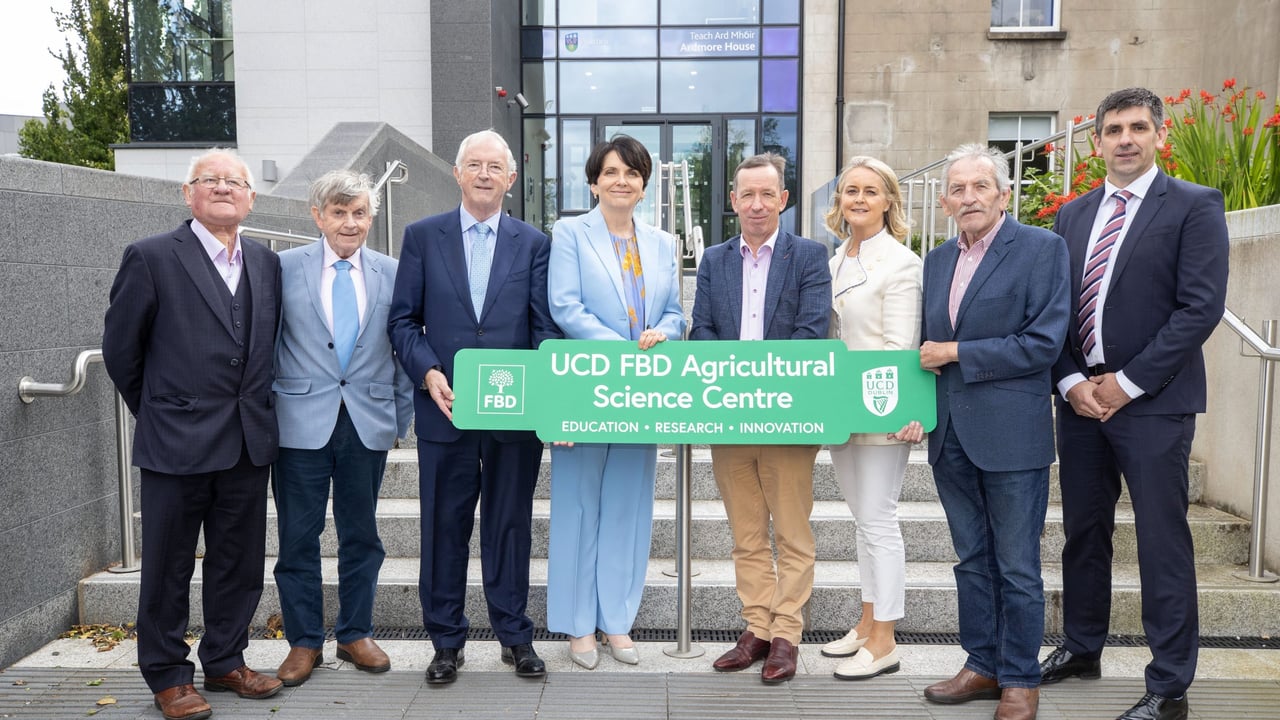
Additionally, FBD alongside University College Dublin (UCD) have invested €14 million in a new agricultural research and education centre at UCD Lyons Farm.
Prof. Alex Evans is the former dean of Agriculture, and former head of the UCD School of Agriculture & Food Science, who researches sustainable grazing and teaches about global food systems.
“The work at UCD Lyons Farm revolves around different agricultural systems in Ireland, using activities at the farm to teach the next generation of agricultural employers and entrepreneurs,” he said.
“It’s for the facility to research issues most pertinent in a real-life farming context.
“Our facilities are 60 years-old in some cases. So, rather than renovate, it’s most cost effective to have a new centre.”
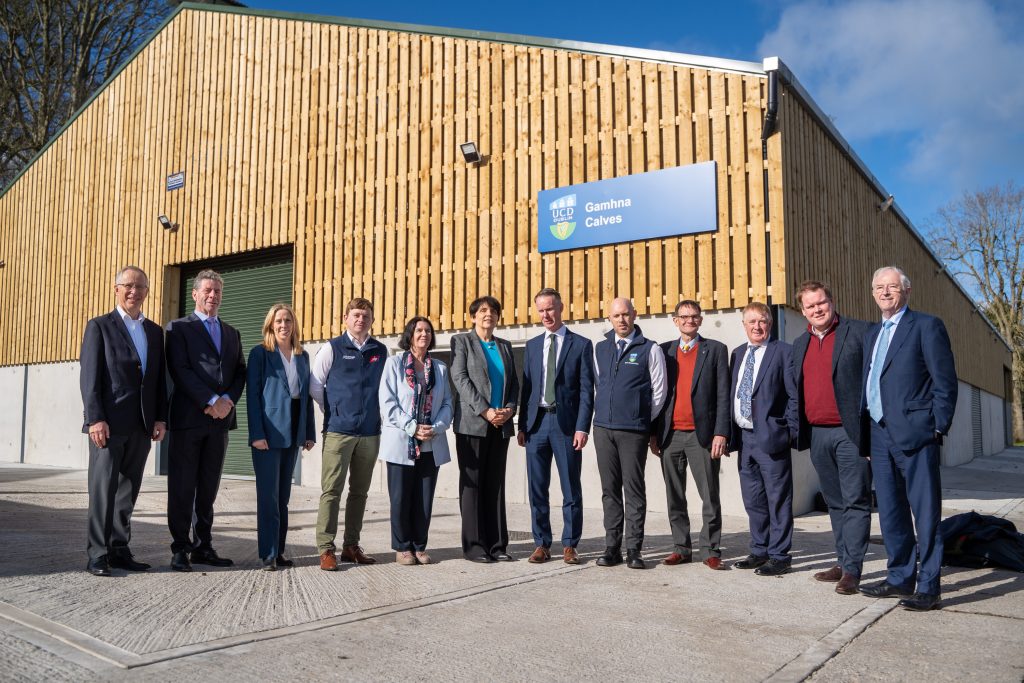
The FBD contribution is essential for capital development.
“It’s all going into the building,” Prof. Evans said.
“We have a collection of redundant buildings, so we’ll scrap those.”
The UCD FBD Agricultural Science Centre will offer a range of facilities.
“The new building will have a lecture hall, a teaching space, a versatile teaching lab for all disciplines,” said Prof. Evans.
These, he explained, include research labs in the area of animal nutrition and crop science, reproductive biology, molecular biology, and facilities for veterinary medicine outreach and their teaching programmes as well.
UCD is pivotal in educating farmers, scientists and veterinary graduates, the professor said, so this investment will both improve the quality of facilities and access to existing ones.
“We have over 2,000 students in agri and food science,” Prof. Evans said.
“Our hope is that more can get the on-Lyons Farm experience."
As well as increased quality of facilities, Prof. Evans said, this investment will also fuel greater capacity of students and researchers.
“We expect to have an uptick in research and postgraduate numbers," he explained.