Farmers record close to 23,000 moths in monitoring scheme

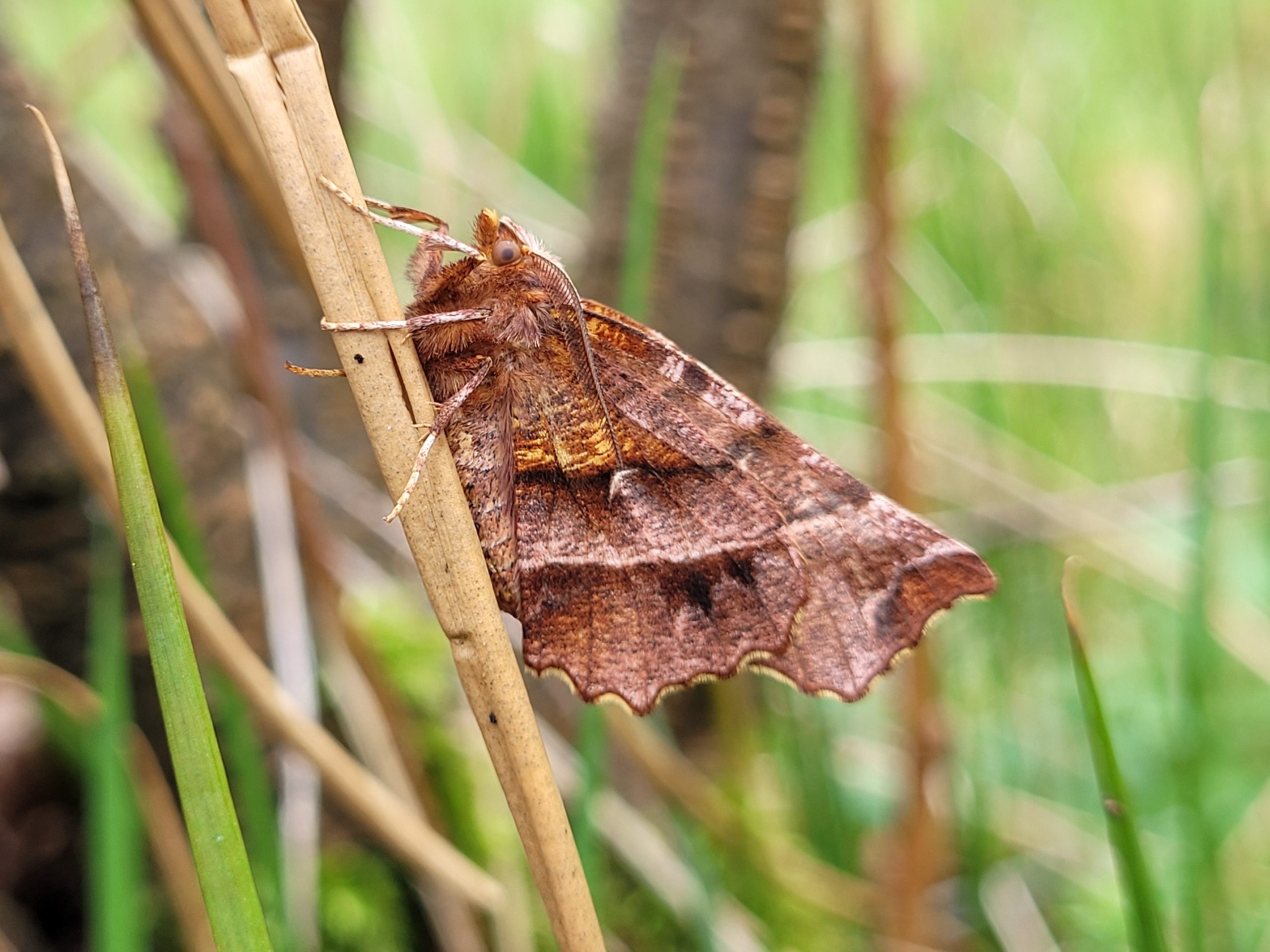
Farmers have recorded almost 23,000 moths in the first year of a monitoring programme overseen by the National Biodiversity Data Centre.
The Farmer Moth Monitoring Project, funded by the Department of Agriculture, Food and the Marine (DAFM), is a citizen science project to enable farmers to record moths on their farms.
Dr. Tim Butter, farmer moth monitoring officer at the National Biodiversity Data Centre, told Agriland that moths have a vital ecological function not just as a food source for many birds and animals, but also as pollinators.
He said: "Because we are mostly kind of daytime animals ourselves, we just don't really see what's happening at night.
"Moths are really important pollinators. Bees, butterflies and hoverflies in particular, are really important during daytime, but there's a night shift as well, and those are the guys we're trying to find out about."
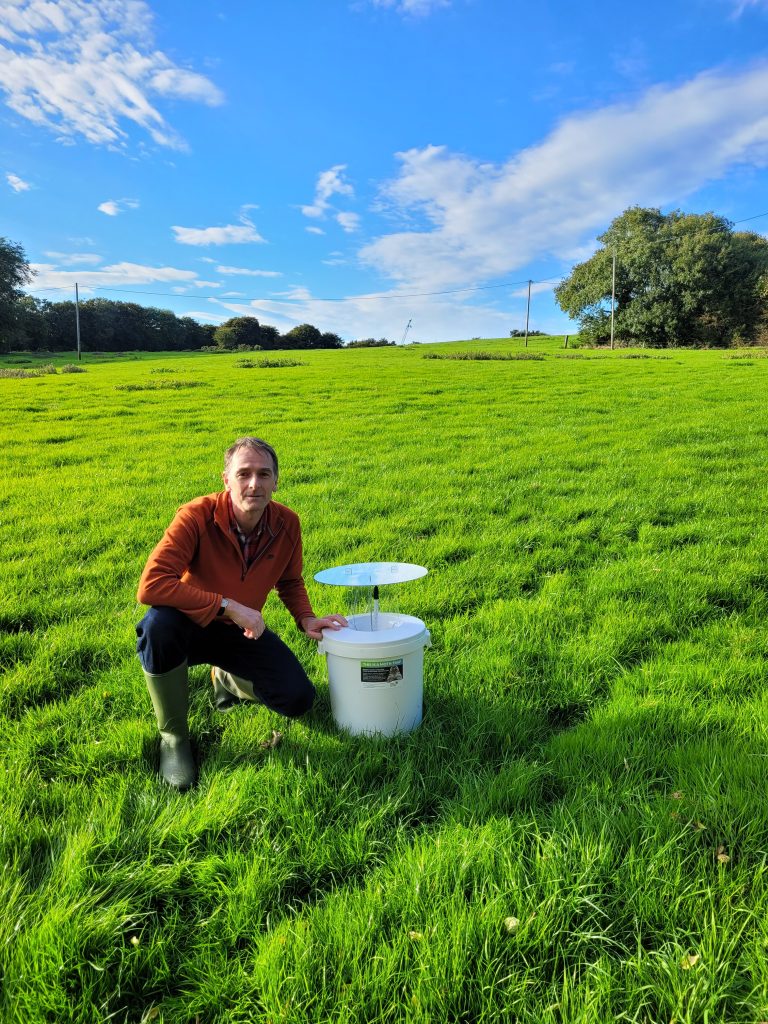
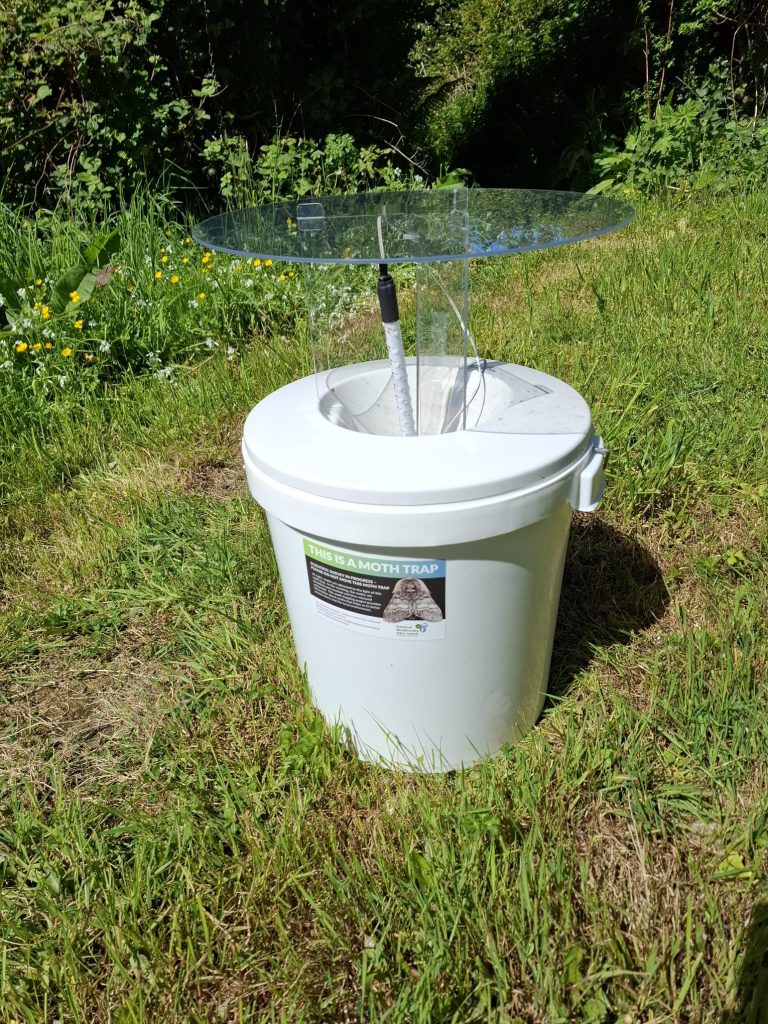
Each of the farmers participating in the project was given two simple light moth traps, which were placed in the middle of a field and beside a hedgerow in the same field every two weeks.
The trap consists of a large plastic bucket with a modified lid and funnel, along with a battery-powered LED light to attract the insect.
The following morning, the farmers photograph of all the moths they find and send the images to the National Biodiversity Data Centre for identification and counting.
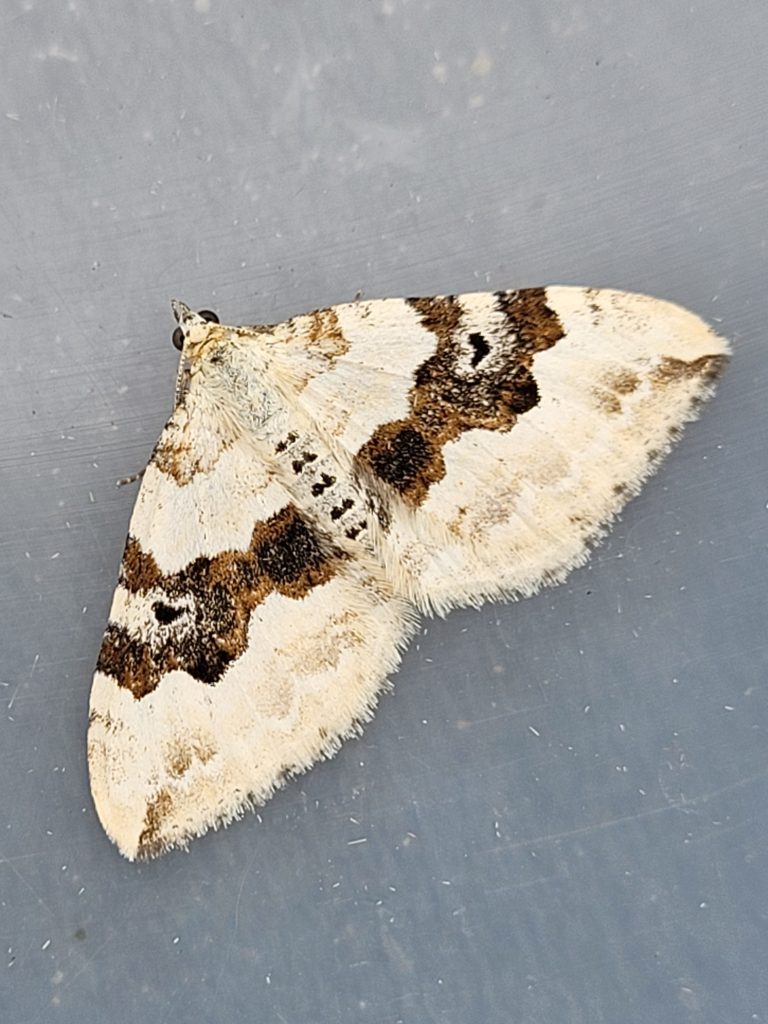
While there are roughly around 1,500 different of species in Ireland, Tim stressed that just two feed on clothing.
"Some species will be quite broad, the caterpillars will eat lots of different plants. Others are completely limited to one plant host.
"Most of the ones we find on farmland would have a very general appetite on various grasses and things like hawthorne and bramble - common plants you'd get in hedgerows.
"Broadly speaking, the hedgerow traps are catching about twice the number of the field traps. Although we call them traps, the moths are captured live and released unharmed in the morning," he said.
Moths
2025 marked the first year that the Farmer Moth Monitoring Project has been rolled out nationally, following a number of pilot projects.
Almost 60 farms across the country took part in the project between mid-April and the end of September, including dairy, beef and organic enterprises. This timeframe coincides with peak moth activity.
Tim said the team has been delighted with the enthusiasm shown by the farmers for the project.
"Unless you've done this, it's difficult to appreciate the kind of level of excitement when you get out to the trap in the morning, because you never know quite what's inside.
"We have this idea of all the moths being small and brown. And sure there are quite a lot of small brown ones, but there are amazing range of colors.
"You might open the box in the morning, and it'd be bright yellow or bright green moths inside," he said.
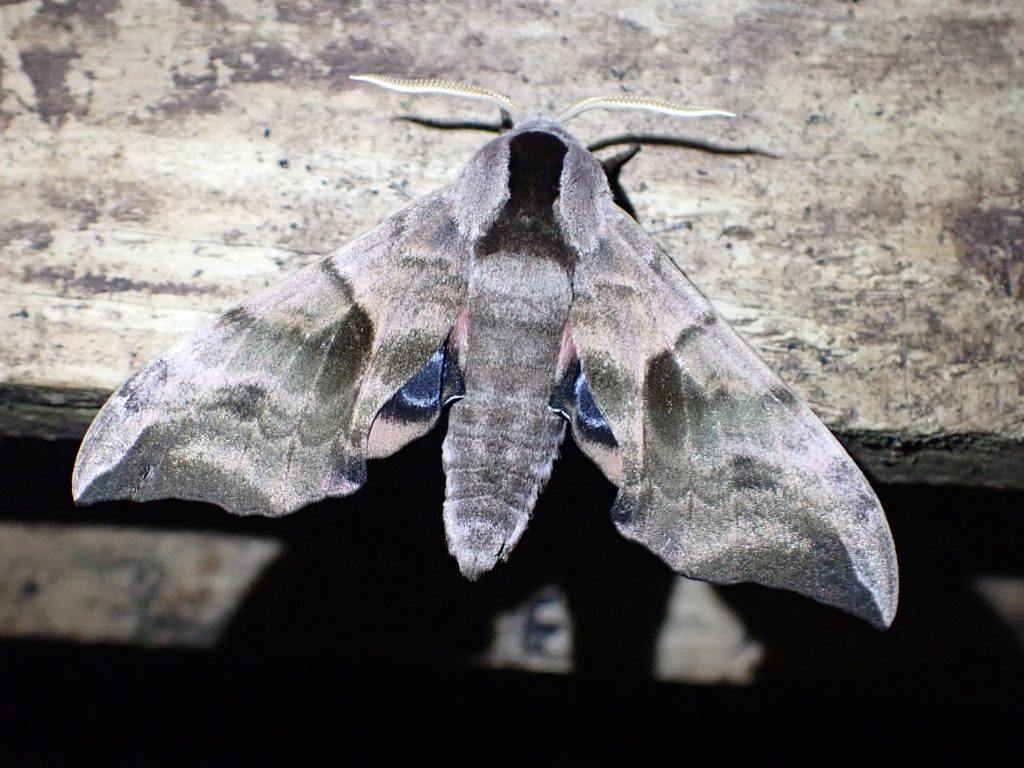
Some species can also be quite big, such as the hawk moth which has a 10cm wingspan and can be the size of the palm of your hand.
"They're mostly placid in the morning, so you get to get really close to a wild animal in a way that you don't normally. You can really have a close look at them," Tim said.
In total, the farmers recorded just under 23,000 moths in total across the whole project. There were around 370 species confirmed, which is around 25% of all moth species in Ireland.
Among the rarer species detected was a Clifden nonpareil moth, which was found by a farmer in Co. Limerick.
The large migrant species had only been recorded around 25 times previously in Ireland.
The 2025 records will now provide baseline data from which the project team hopes to build up trend data over the coming years.
"So far, we just have a snapshot of what's happened this year. What we really are looking for is what's going to happen over time.
"Are the numbers can be going up, going down. Is diversity increasing? That's kind of information we're looking for," Tim said.
It appears that enthusiasm is not waning in the project, as 57 of the farmers who took part in 2025 are planning to continue with the monitoring this year.