EU heavyweight France says Mercosur deal 'not acceptable' and wants vote delayed


Considered a heavyweight in terms of EU member states, France has declared in the past 24 hours that the proposed trade deal with Mercosur countries in South America "is not acceptable as it stands".
The deal would see Mercosur countries such as Brazil and Uruguay remove import duties on 91% of EU goods.
However, on the other side of the agreement, the Mercosur countries would get to sell their goods to the EU with fewer restrictions. These include sugar, honey, soybeans, and, importantly to Ireland, meat, specifically beef.
The EU-Mercosur trade deal would allow 99,000t carcass weight of beef from the Mercosur countries to enter the EU at a much reduced tariff rate of 7.5%.
Since the conclusion of the negotiations between the EU and Mercosur in December 2024 in Montevideo, France has said that it has made it clear that the partnership and trade agreement presented by the European Commission is not acceptable, because "agriculture and consumer protection cannot be adjustment variables".
In a statement provided to Agriland and translated, the French Government outlined: "For months, the President of the Republic and the government have mobilised the European partners who share our reservations to obtain additional guarantees, with three specific requests:
- A robust safeguard clause that can be effectively activated to complete the agreement and protect agricultural production sectors from any market disruption;
- Mirror measures, in particular on pesticides and animal feed, so that imported products entering the internal market comply with the environmental and health standards imposed on European producers;
- The establishment of robust sanitary control and verification mechanisms: sanitary and phytosanitary [SPS] controls on imported products, at the EU's borders and in exporting countries, on-the-spot audits, creation of a 'European health control force'."
In October, the European Commission presented a proposal for agricultural safeguards to complete the agreement, which still needs to be voted on by the European Parliament, adopted by the council and whose robust and operational nature will have to be guaranteed.
On December 9, it announced proposals to strengthen health controls at borders, in third countries and in the internal market, which will be put in place from 2026.
It is soon to present proposals for mirror measures to guarantee the fairness of production conditions.
"These are new elements, which show that the concerns of France and its partners are beginning to be heard," the French government added.
"However, these advances are still incomplete and must be concretised and then implemented in an operational, robust and effective manner, in order to be able to produce and appreciate their full effects.
"While a Mercosur summit is announced on 20 December, it is clear in this context that the conditions are not met for any vote by the Council of the EU on authorising the signing of the agreement.
"France can only make a definitive decision on the basis of concrete, precise and operational elements, and not on the basis of simple announcements."
That is why France is asking that the December deadlines be postponed in order to continue the work and obtain the legitimate measures to protect European agriculture.
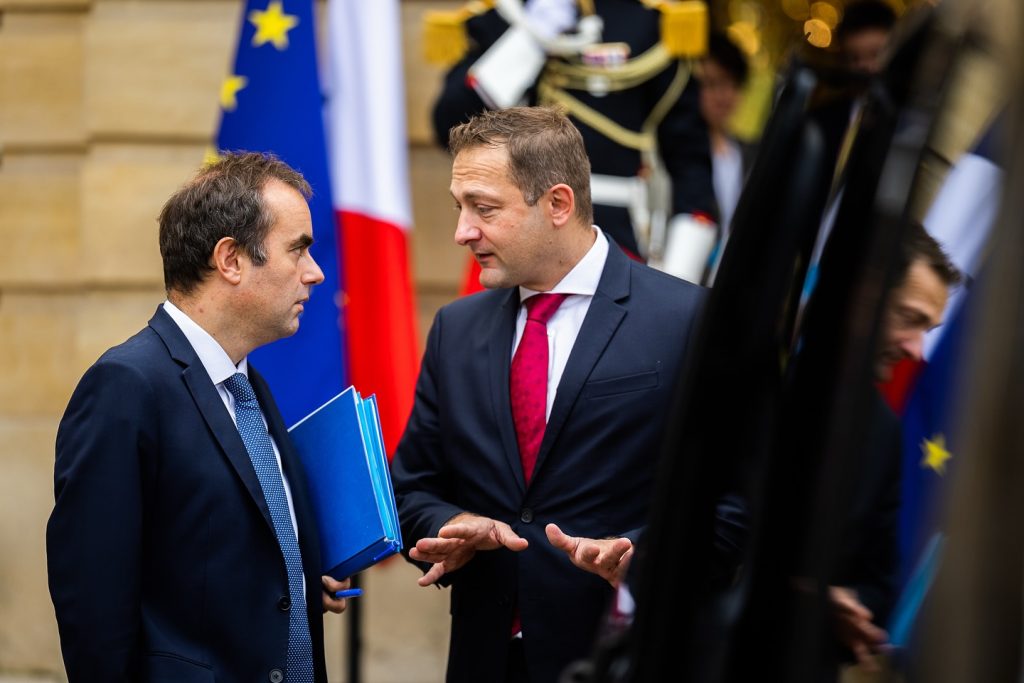
More generally, the French Prime Minister's office has stated that the country will continue to firmly defend its agricultural interests, both with regard to the draft EU/Mercosur agreement and the Common Agricultural Policy (CAP) in the EU's next multiannual financial framework (MFF) for 2028-2034.
"In this respect, it is determined that the resources granted are commensurate with our ambitions for agricultural and food sovereignty, to maintain the appropriations allocated to France, to refuse any renationalisation, and to preserve the character of the CAP as a genuinely common policy," the statement continued.
"The preservation of conditions of fair competition and competitiveness for our agricultural sectors will also be defended with regard to measures related to the availability of affordable fertilisers and protection against carbon leakage.
"The President of the Republic and the government will continue to defend a strong CAP in France and Europe, to guarantee production conditions and fair competition, ensure health safety and strengthen agricultural and food sovereignty.
"France will not compromise on its status as a major agricultural power; this is a strategic priority."