Dutch vs Irish dairy: How do they compare?


The Dutch dairy industry is well into its new reality following the loss of its nitrates derogation for the 2026 season.
The nitrates derogation in the Netherlands officially finished on December 31, 2025.
Following that, a €615.7 million scheme was approved in April of this year with the aim of reducing the national dairy herd.
In spite of all of these changes, milk production is holding strong, but how does it compares to Ireland's production?
Milk production
According to CRV, a breeding improvement centre in the Netherlands, milk production is actually up this year.
The centre recorded average pedigree milk production at 9,935kg of milk/cow between September 1, 2025 and August 31, 2026.
Solids were recorded at an average of 4.48% butterfat, which was the same as 2025, and 3.66% for protein, a 0.02% on last year.
Overall, solids rose by 48kg/cow in 2026, leaving the average at 809kg/cow, according to CRV.
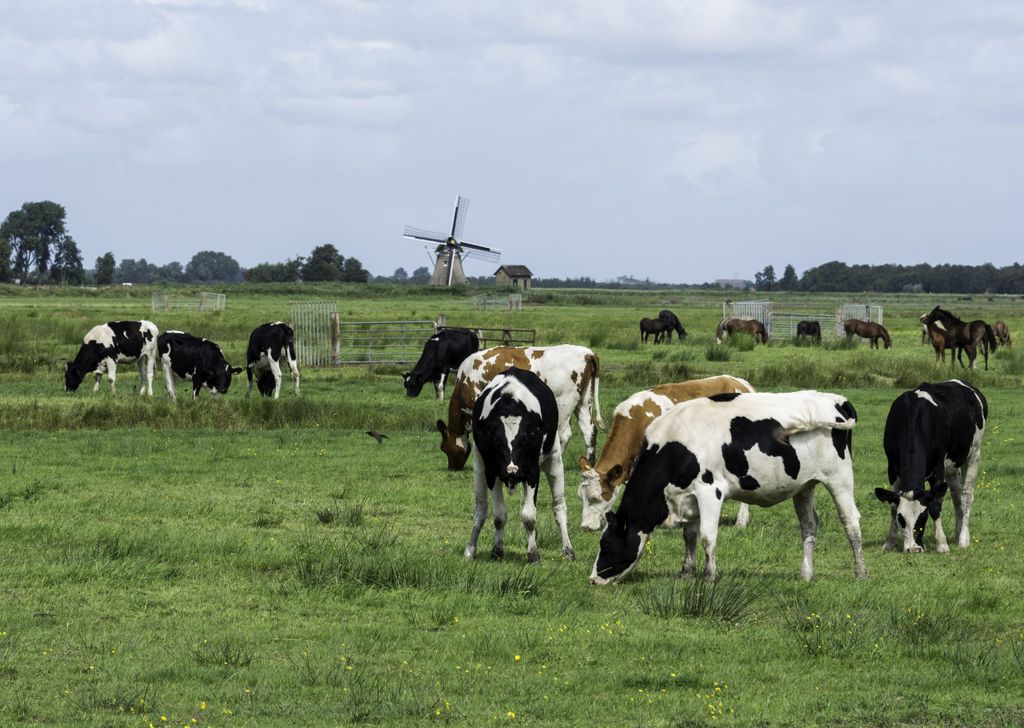
Lifetime production at culling has increased to an average of 38,126kg of milk at 4.43% fat and 3.60% protein.
Just a decade ago, this sat at 30,967kg of milk with 4.35% fat and 3.53% protein.
That means solids have increased from 2,440kg to 3,062kg at culling.
According to CRV, the productive lifespan of Dutch dairy cows has increased by 137 days, to 1,413 day in 2026, which is the equivalent 3.87 years in milk.
The Netherlands has also reduced its number of rearing days to 759, 27 days less than a decade ago.
Irish milk
Meanwhile, over here on the Emerald Isle, milk production is also on the rise.
In 2025, the average milk produced per cow increased by 6% to 5,999L, up from 5,674L in 2024, according to Teagasc's 'Achievements 2025' report.
That 5,999L equates to 6,179kg of milk, 3,756kg less than what the Dutch group recorded.
Irish solids increased by 7% on ProfitMonitor farms, going from 481kg in 2024 to 515kg in 2025, at 4.36% fat and 3.61% protein.
These solids are still 294kg below the 809kg recorded in the Netherlands.
Environment
There are pasture-based dairy farms in the Netherlands, although many still feed total mixed-rations (TMR) to drive production on further.
In fact, Dutch agricultural consultancy PPP-Agro Advies has suggested that grazing practices are falling backwards as a result of the new nitrates restrictions, amongst other factors such as labour.
Studies and surveys carried out by the advisers indicate that rules and regulations in place to improve the environment are ironically driving cows back in and away from sustainable grassland pastures.