Irish Dairy's Grass-fed Strength
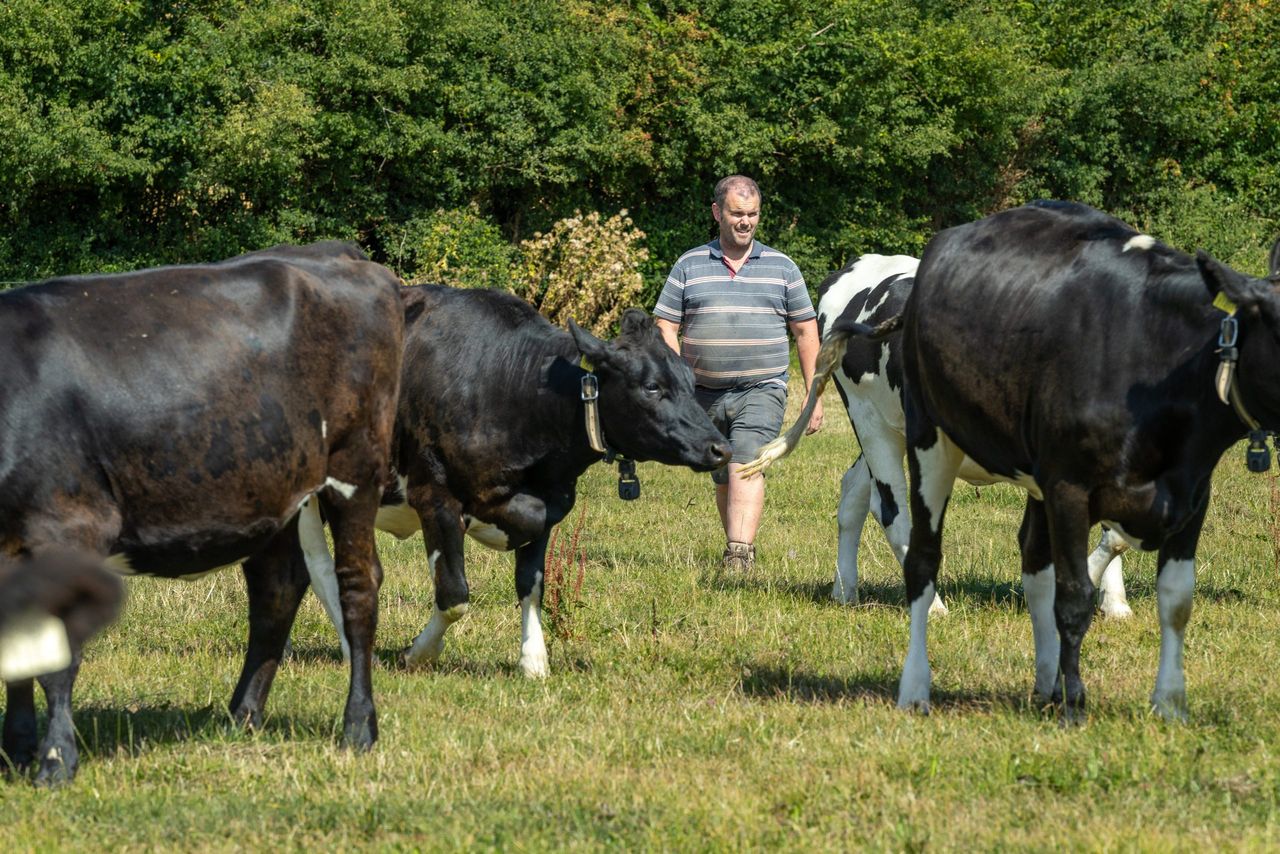
Despite these recent challenges, grass remains at the heart of Irish dairy farming.
It is not only important for milk production, but also a key part of what sets Irish dairy apart in export markets.
In this series, we talk to Irish dairy farmers about their grassland management and the challenges they faced this summer.
We also hear from David Kennedy, Bord Bia head of dairy on why grass-fed matters to dairy customers around the world, and how Bord Bia verifies the grass-fed credentials of Irish dairy.
David Hally
First we meet David Hally, who farms just outside Clonmel in Co. Tipperary and supplies Dairygold.
David outlines how he manages grass and how he adapted during this summer’s drought conditions.
David farms a 35ha platform carrying around 2.6 cows/ha. The farm produced 530kg of milk solids/cow last year, with David hoping to improve on that figure this year.
For David, regular grass measurement is central to how he manages the farm.
He explained: “I measure grass in the height of the year, I measure grass about every five days – five to six at the height of the growing season.”
The farm is soil tested every two years, while David aims to reseed around 10-12% of the farm each year.
He targets pre-grazing covers of around 1,200-1,400kg DM/ha, with surplus grass taken out quickly for bales and returned to the grazing rotation once it has regrown.
“We work a rotation here of 21 to 23 days,” he explained.
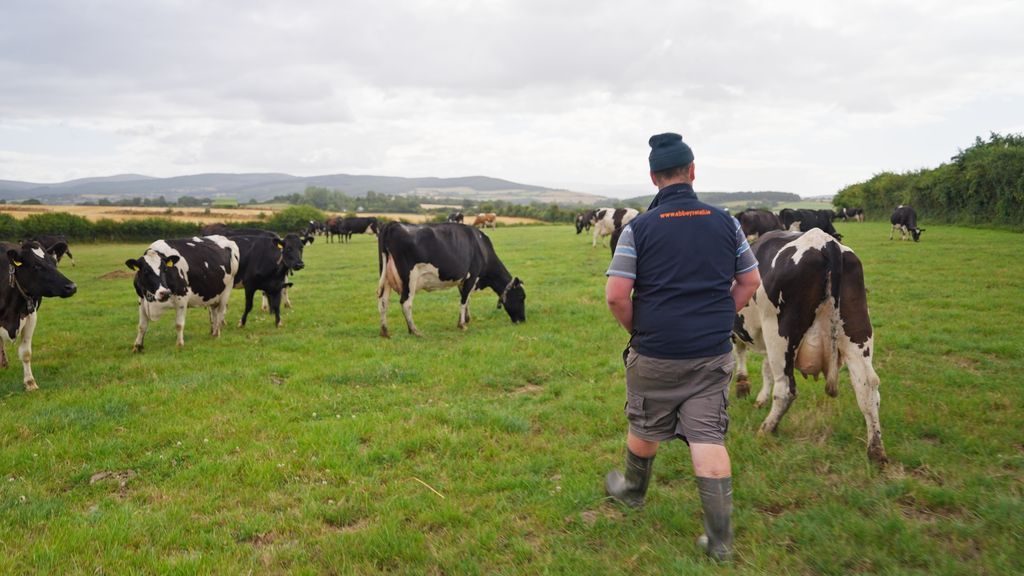
White clover has also become part of the reseeding strategy on the farm, with David using a mix of 4kg of clover seed and 10kg of perennial ryegrass per acre.
He said the focus is increasingly on growing grass from clover and making more efficient use of nitrogen.
“I am looking to grow more grass from clover and less from nitrogen.”
Adapting to a difficult summer
The drought conditions experienced this summer put his system under significant pressure, particularly on the farm’s free-draining soils.
“Since mid-June we have been suffering, I suppose, in terms of growth due to lack of moisture,” David said.
(The interview with David was conducted in early August.)
As grass growth slowed, his herd spent more time indoors to get adequate nutrition:
“They’re not coming out for any big volume of nourishment. They get everything they need indoors and they come out for a lie down.”
David acknowledges the challenges but is positive overall about managing drought conditions.
He said: “It does represent extra cost, but in my view, it’s just something that we have to have our business flexible enough to cope with those challenges.”
David believes Ireland’s grass-based system is also important beyond the farm gate, particularly when Irish dairy is being sold into international markets.
“Grass-fed is what differentiates us Irish dairy farmers from the rest of the world and from the world market.”
He said maintaining that point of difference is important as Irish dairy competes for customers around the world.
Bord Bia
This is where Bord Bia’s role in independently verifying the characteristics of Irish dairy production comes in.
David Kennedy, Bord Bia’s head of Dairy, explained that Bord Bia works with Irish dairy exporters to help deliver value back to Irish dairy farmers through international markets.
He said: “When we speak to global customers, it’s important that we’ve got really robust, independent proof."
The Sustainable Dairy Assurance Scheme (SDAS) provides the foundation for this work, with every Irish dairy farm visited at least once every 18 months as part of the assurance process, including the completion of a carbon footprint.
According to Kennedy, this provides international customers with confidence that the data underpinning Ireland’s sustainability claims is robust and independently verified.
Bord Bia has also worked with industry to develop a grass-fed standard, providing a framework to substantiate grass-fed claims.
“With the grass-fed standard we can stand over the fact that the milk that’s gone into producing that ingredient of that product has come from cows that we fed a diet of 90-95% grass and have been grazing outdoors for a majority of the year.”
The Irish Dairy's Grass-Fed Strength series is a collaboration between Agriland and Bord Bia.