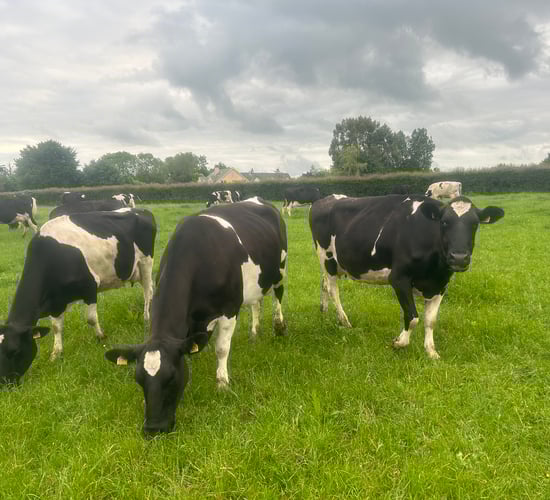
Court: Farmer wins row with council over 150m stretch of road traversing his farmyard

A farmer has won a High Court row with a county council concerning a disputed 150m stretch of road that crosses his farmyard in Co. Monaghan.
This follows Justice Nessa Cahill finding in favour of farmer, Donal Gerard McDaid in his court action against Monaghan County Council over the ‘disputed road’ of 150m in length.
McDaid claimed that the disputed road is a private road or a private right of way, whereas the council claimed that it was a public road.
In her 45-page written judgment finding in favour of McDaid, Justice Cahill stated that she is not satisfied that the disputed road is a public right of way or a public road.
She said that she will “grant a declaration to that effect”.
Justice Cahill also stated that it is her provisional view that the council must pay McDaid’s legal costs but ruled against the council paying damages to McDaid.
The disputed 150m stretch forms part of ‘the 12 Road’, which was created in or about 1834 and was merely a right of way for the use of descendants of Simon Donaghy, including McDaid.
As part of his case, McDaid also contended that it is a private road and in use as such for 190 years.
On behalf of McDaid, it was contended that members of his family are the primary users of the disputed road and that successors in title to the Donaghy lands have always had the right to traverse the disputed road since 1834; that there was no evidence of any dedication or taking in charge of that portion of road.
However, the council argued that the disputed road was a public right of way and that the entire 12 Road, including the disputed road, was taken in charge by the council.
The council also contended that this was because it was dedicated as a public right of way and taken in charge under the 1953 Act.
In its case, the council relied on the maxim of omni praesumuntur rite esse acta (“presumption of regularity”) to overcome the absence of evidence of the road being taken in charge.
The council’s position was that it was only post-2019 when enforcement proceedings were commenced challenging the construction of an underpass beneath the disputed road that McDaid raised the question of the road not being a public road.
Court findings
In her findings, Justice Cahill found that the evidence presented does not demonstrate a use by the public at large of the disputed road.
Justice Cahill stated: “In short, applying the applicable legal principles, I am not satisfied that the user has been shown to be of sufficient volume, extent, frequency or duration to warrant an inference of dedication of a public right of way.”
Justice Cahill also found that there is not sufficient evidence to ground an inference that McDaid (or his father) intended to dedicate the road as a public right of way or that this was accepted as such by the public at large.
“I am not therefore satisfied that the disputed road is a public right of way.”
"Given this finding, it is not necessary to proceed to determine whether the disputed road was taken in charge by the council," she stated.
Justice Cahill for completeness in her rule also found that it has not been shown that the disputed road was taken in charge by the council.
Underpass
Justice Cahill stated that from the evidence of McDaid senior, it is apparent that there was work done in 2017 on the construction of the underpass to allow cattle to pass from one side to the other which involved digging up the disputed road.
Justice Cahill stated that from then, McDaid submitted multiple applications for retention planning permission and was party to multiple legal proceedings (including ongoing criminal proceedings), in which – the evidence shows – the question of whether the disputed road was a public road looms large.
The council closed the local road in December 2017, as it was a hazard to road users and it has remained closed since then.
On the issue of Justice Cahill’s provisional order awarding costs against the council, she stated that if the council wishes to contend for a different form of order, written submissions should be submitted by December 19, 2025.
She stated that McDaid may then deliver replying submissions by January 16, 2026 and "will list the matter before me for the purpose of deciding the allocation of costs and making final orders on January 20, 2026".