Can the NIR sensor help make better silage?

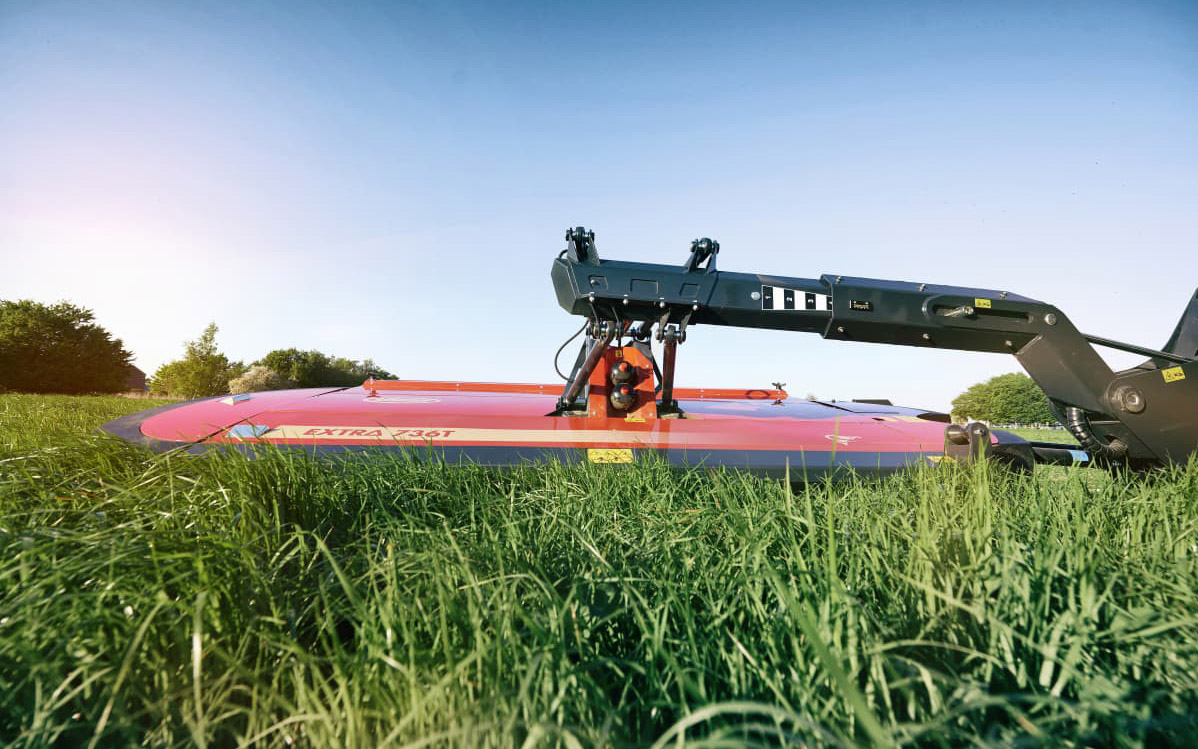
At this year's Agritechnica, the Kverneland Group launched a dry matter sensor that sits above the conditioning unit of its mowers and determines the moisture content of the grass as it is cut.
It is being sold as the Vicon DM Sensor and presently the company does not enlarge upon the sensor used, but it is most likely to be of the near infrared (NIR) type as deployed in many other applications.
This may appear just another electronic gadget that has been cooked up to appear impressive and forward-thinking, but its practical value could actually live up to the hype.
The importance of DMD
Teagasc maintains that it is the dry matter digestibility (DMD) of silage that is important in silage production.
This is an indication of the energy value of the forage, with a value of 68-72% being a good figure to aim for, according to Teagasc
Kverneland's contention is that by knowing the DM content of the crop right at the start of its preservation process, decisions for its subsequent management may be better informed and a higher quality silage will result.
The company notes that immediate decisions the operator may make depending on DM content include adjusting the conditioning intensity, or whether to change the mower settings to form a wide swath or merge swaths.
The farmer may also use the information to decide upon the need to spread the crop for wilting, and the approximate time that it should be left before rowing up, although there are large number of other factors involved in this latter decision.
Field mapping by moisture
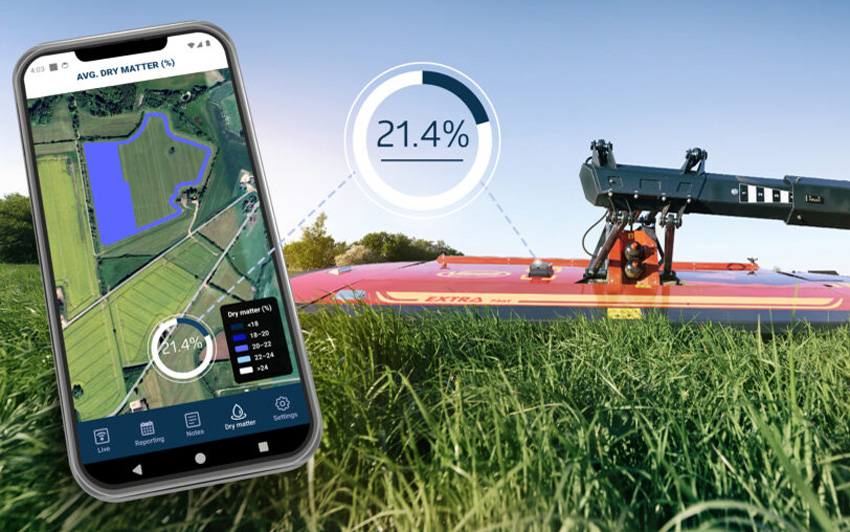
A further function of the DM sensor is the generation of what is referred to as a heat map of each field harvested.
This gives the operator and farm manager a picture of the fields that have been cut, showing the DM content of the grass in each.
With this added clarity, planning the complete harvesting may be done more effectively through the optimisation of field priorities, ensiling the dryer fields before the wetter areas.
If the DM value is lower than expected, then the need for tedding can be better anticipated and planned, for the tool may be used as an aid to the optimal timing for rowing up, or the likely delay before baling is possible.
This brings us on to another beneficial location for the sensors - on a tedder.
This will give a very positive indication of the moisture content of the crop and will certainly take some of the guesswork out of hay making.
However, the way in which NIR sensors work may prohibit this application.
NIR sensors
NIR is part of the light spectrum, so to work effectively and accurately it needs all other sources of illumination, especially sunlight, to be eliminated.
This might explain why the designers have placed the sensor above the conditioning unit, a location where the cut grass is pressed up against the sensor's window, excluding extraneous light.
To replicate such a situation on a tedder will be a challenge, if possible at all, so we may be waiting some time for these machines to be fitted with sensors.
Decision support
On the face of it, there is some potential for the device to aid the preservation of forage, be it silage or hay, yet supporting visual and hands-on experience with digital technology may take a while for farmers to adapt to.
However, at present, there appears to be one great use for the sensor that has yet to be exploited, and that is the ability to optimise the rate of silage additive according to the dry matter of the crop.
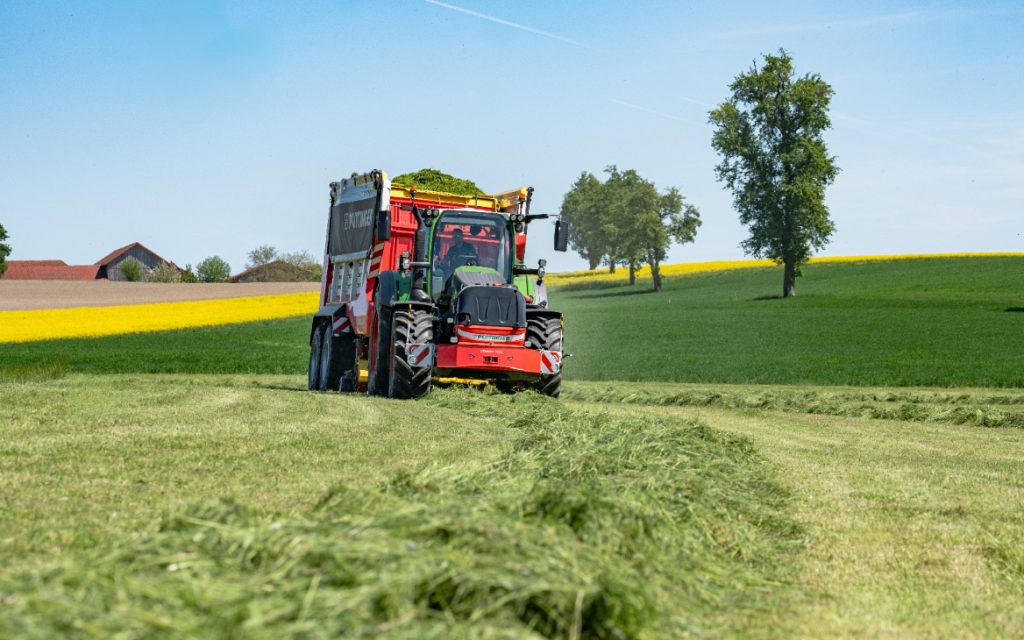
Pottinger brought one of its 2025 innovations along to Agritechnica in the shape of a silage additive applicator for inoculants, which has the tank mounted on the front of the tractor and the spray heads located above the crop stream just before the rotor.
The company notes that the application rate may be adjusted manually in 10% increments or set to match the crop flow.
As an additional option, it can also be set to match forward speed.
Rate by real time analysis
Despite this versatility, perhaps the most critical variable by which application rate should be decided - the dry matter of the crop itself - is not one that is presently catered for by the unit.
There are two remedies for this: the first is to share a field map with a Kverneland mower fitted with a DM sensor; while the second is to fit a sensor to the baler itself.
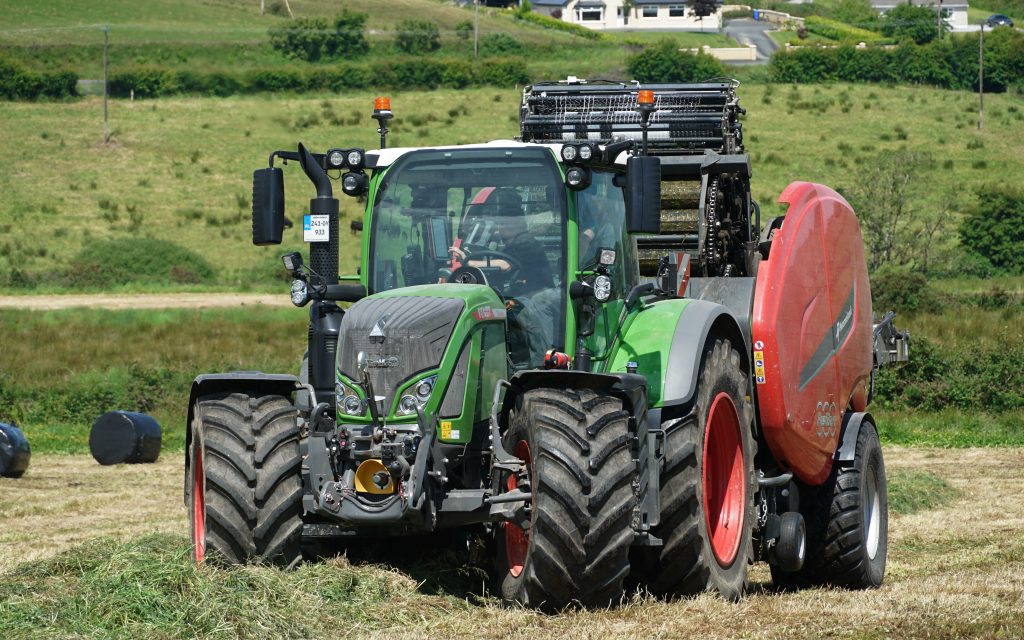
The second would give a more accurate application rate but it comes at the end of the harvesting process, whereas Kverneland maintain that the best stage for assessing DM is mowing.
Given how it is necessary for full contact between the sample and the sensor, fitting one to a baler may also be problematic.
It will eventually come down to a matter of cost.
It may be that the expense of fitting two machines with sensors is not prohibitive, or that more value is gained from fitting it to the baler rather than the mower, or vice versa.
Sensors in feeding
Moving on to the end of the fodder production process, the ability to ascertain the dry matter of silage as it is added to the feeder will enable farmers to alter the quantities of concentrates to achieve the required ration.
Silage is usually the first item to be loaded, enabling its DM analysis to be ascertained before other items are added.
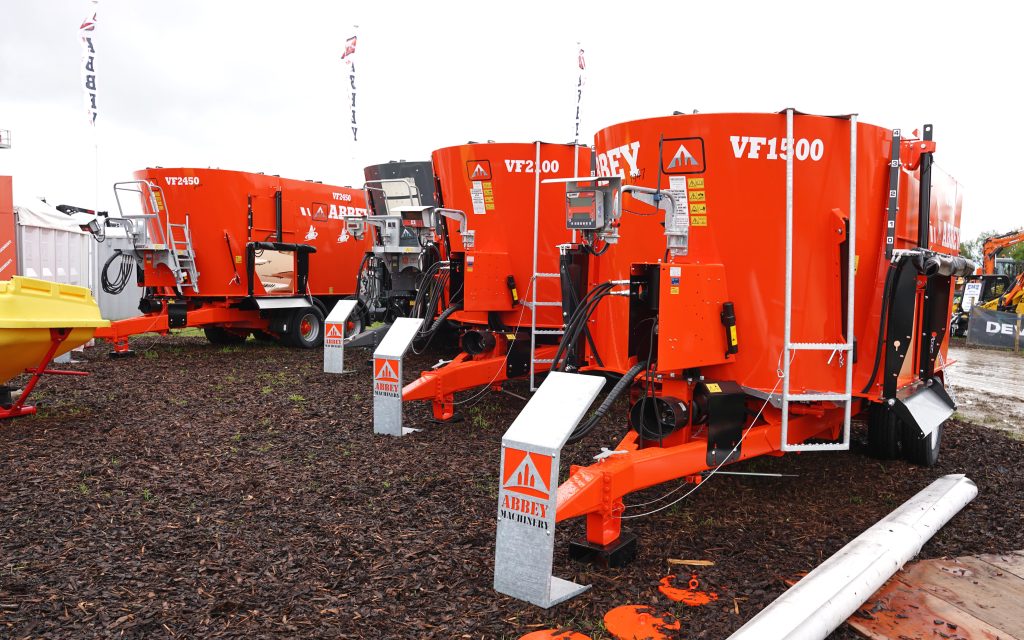
There have already been attempts to use NIR technology on feeders, but they appear not to have met with any great success and we hear little of the concept now.
NIR is a useful tool and could bring major benefits to farming if the problem of sampling could be overcome.
Whether it might be possible to do so through some clever maths - or artificial intelligence (AI) as it is normally labelled nowadays - is an open question, but it is an avenue which may well reward those companies that explore it.