Sponsored Article
Tips: What are your breeding goals for the next 12 months?

Sponsored Article

Following the 2018 challenging summer, with an extended dry period, we can look forward to the next breeding season – now fast approaching.
So, in preparation for breeding, now is a good time to ask ourselves: What are my breeding goals for the next 12 months or, in other words, what heifers will I be milking from 2021?
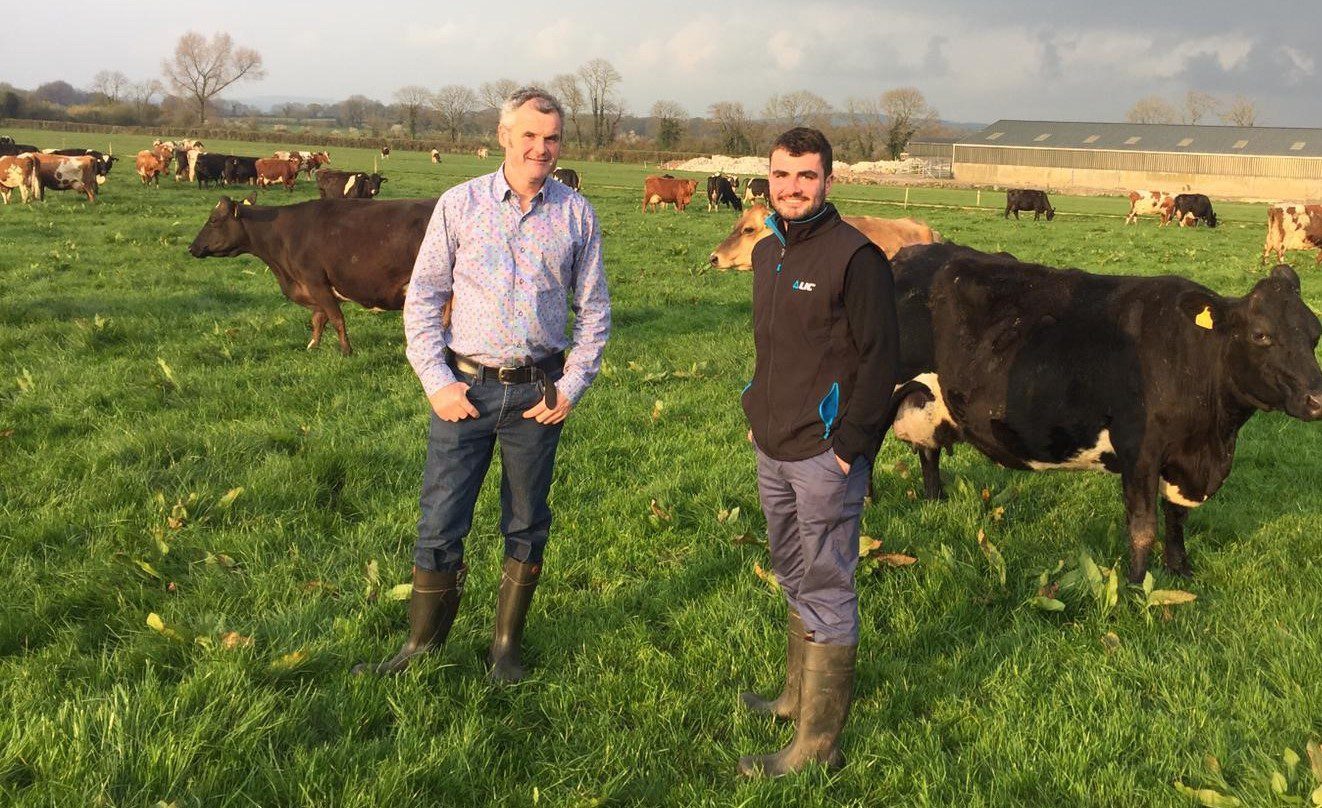
This, along with some other key questions, were put to LIC’s breeding advisor David Power.
Talking about the most reliable way to achieve this, he said: “One thing we’ll have taken out of the past season was the need for a resilient cow.
“With the hardship of changing weather patterns, variable milk prices and political uncertainty, we need to start planning what will be required of our cows, especially if the current trend to pay on solids continues.”
Key questions
Continuing, he said: “While farmers may differ on what the ideal cow looks like, most will agree that, going forward, what is needed most is a cow that will efficiently convert grazed grass into kilograms of milk solids, with ease of management.

“As with most spring-calving herds, the six-week in-calf rate is critical in order to maximise days in milk. This will allow us to convert as much grazed grass as possible into kilograms of milk solids.
“A compact spring-calving cow will be the aim of all, with overall profitability depending on producing quality milk from the most economical feed from the most suitable cows,” he said.
“For this we need a cow that will maintain body condition score, come into heat as soon as possible after calving and go in calf as fast and early as possible.
“In developing a herd that will effectively harvest and convert pasture to milk, no herd improvement programme is complete without a well-rounded approach.”
So, is farm profitability as important as ever and when is 6,000L better than 8,000L?
Commenting on this, David said: “The bigger the cow, the more feed she requires. Introducing a cow with a lower liveweight, that’s able to produce a substantial quantity of litres with higher solids, should provide the best of both worlds.
“Therefore, in the critical area of farm profitability, Teagasc data will show the herds that harvest the most grass are profitable. A 10% increase in grazed grass will reduced the cost of production by 2.5c/L, irrespective of milk price, compelling you to introduce a cow that will aggressively graze pasture.
“Although stature has its cost, genetic gains have shown that in LIC New Zealand (NZ) bred bulls, milk solids production has increased, on average, by 21kg of milk solids, for minimal additional stature (5kg), with 300-500kg feeding requirements that are absolutely imperative for a resilient herd,” he said.
How can we know which are our best cows?
Speaking on this, David advised: “Milk recording a minimum of four times per year, the first no more than 65 days from the planned start of calving and spread across the entire lactation of the cow.
“Building up information across multiple lactations will only improve your ability to improve your herd. Therefore, as you look to choose which heifers are coming into the herd, as a group they will need to be better than their mothers.
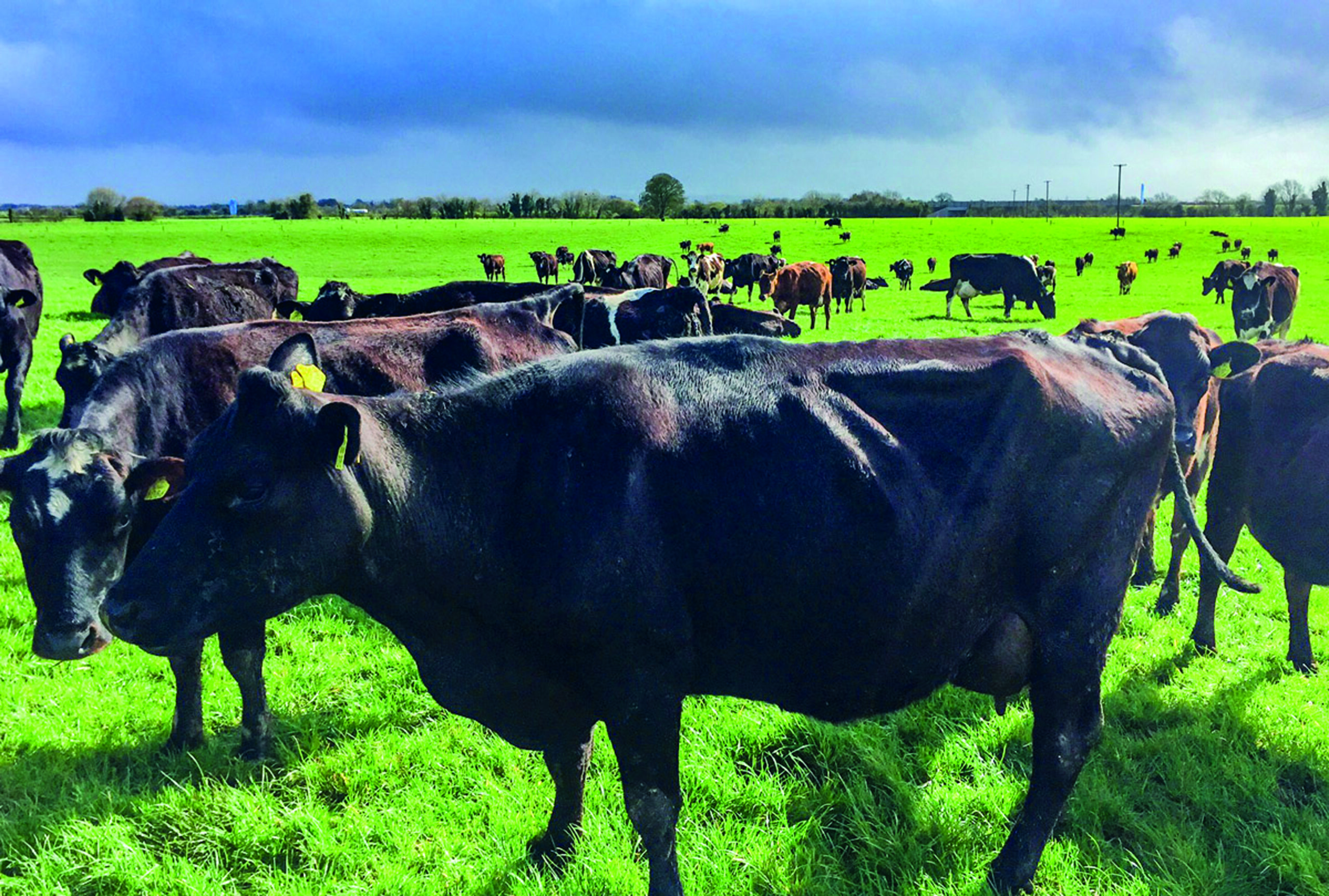
“The average difference within Irish herds between top quartile cows and the bottom quartile on production is between 160kgMS and 200kgMS, and the incoming first-calving cows mirror their mothers.
“LIC NZ-bred bull team is backed by daughter data which includes at least one full lactation in NZ. The reliability of this information gives us confidence that LIC sires have outstanding genetic merit to meet the individual needs of pasture-based farmers,” he stated.
How do we approach the issue of fertility?
“Poor reproductive performance can be a handbrake on farm profitability goals. Therefore, the key is to recognise that the type of cow you’re milking fits the system.
“Here, crossbreeding can be your friend, with mounting evidence that in a grass-based system the crossbred cow has a higher survival rate due to better reproductive performance.
“Days in milk are the main driver for improved milk production, while top reproductive performance allows you to apply greater selection pressure to the cows you cull, the calves you keep, and the bulls you use.
“NZ currently through all breeds has a calving interval of 368 days, compared to the Irish cow with a calving interval of 387 days.”
What about herd reproductive performance?
Breeding is an all year-round process and herd fertility is split into eight core management areas.
So, what do you believe drives profit?
“It has to be efficiency combined with simplicity and a low cost of production. Remember that everything is subject to the most limiting factor. Implement a ‘plan, do, review’ process to identify core areas to address limiting factors to your business.
“To monitor performance, you must have a good recording system and historical data will help you identify limitations to your business,” he concluded.
Sponsored Article